Module 2: Digitalisation in Research
Licenses for research output
Jana Lasser
TU Graz & CSH Vienna
2021-12-16
Intellectual property rights (IPRs)
"Everyone has the right to the protection of the moral and material interests resulting from any scientific, literary or artistic production of which he is the author."
United Nations Universal Declaration of Human Rights, Article 27
Research output is property and comes with residual rights and obligations. Somebody or some entity has legal ownership and possession of the research output. IPRs concern the relationship between ownership and usage of research output.
Copyright & Licenses
If you are the owner of research output, copyright protects you from others producing unauthorised copies of your work. Licenses set the conditions that define the terms of usage.
What if I don't provide a license at all?
The absence of a license means that default copyright law applies: nobody may reproduce, distribute or create derivative works from your output.
That's completely fine and legal. But as a scientist, I want others to build on and re-use my work. To enable them to do so, I need to set the conditions of using my research output.
Open licenses are the backbone of Open Science.
Types of research output

How can we find a fitting license for our research output?
Types of research output
How can we find a fitting license for our research output?
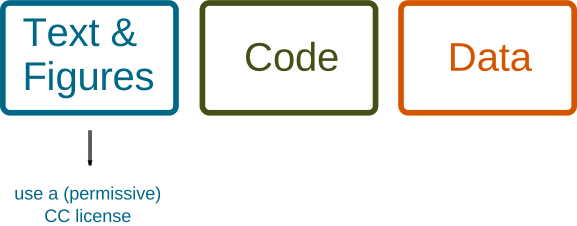
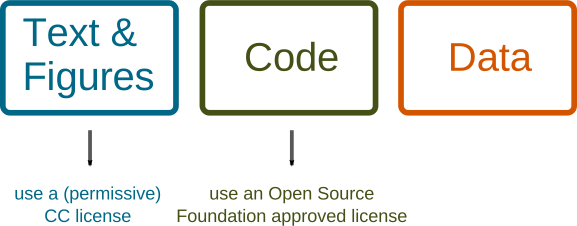
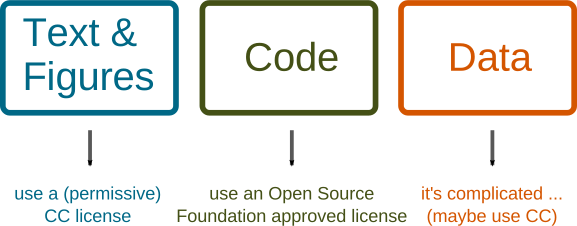
Text & figures: Creative Commons (CC)
Text & figures: Creative Commons (CC)
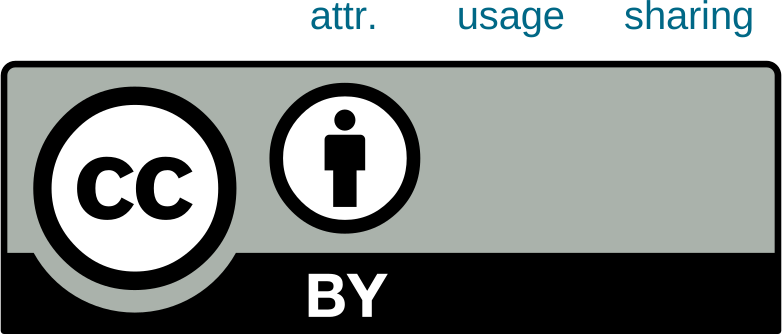
CC-BY: adapt & share with attribution
Text & figures: Creative Commons (CC)
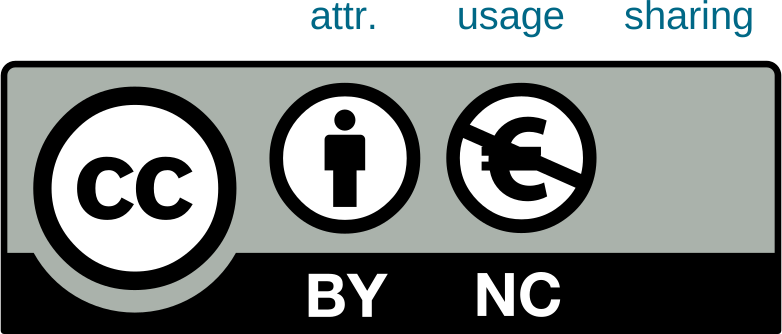
CC-BY-NC: adapt & share, but non-commercially
Text & figures: Creative Commons (CC)
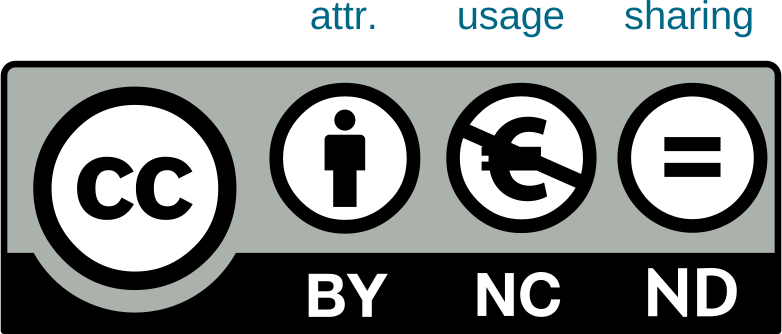
CC-BY-NC-ND: share, but non-commercially
Text & figures: Creative Commons (CC)
CC-BY-NC-SA: adapt & share, non-commercially & same license
Text & figures: Creative Commons (CC)
CC-BY-SA 4.0: adapt & share with same license
Read more about license versions here.
Text & figures: Creative Commons (CC)

CC0 "no rights reserved"
Code
Unlike software-specific licenses, CC licenses do not contain specific terms about the distribution of source code, which is often important to ensuring the free reuse and modifiability of software.
Open Source Licenses allow software to be freely used, modified, and shared. The Open Source Initiative provides a list of approved licenses.
A very helpful list of differences in license permissions, conditions and limitations can be found here.
MIT license

MIT: modifications don't need to be open sourced.
General Public License 3
GPL 3: modifications need to be open sourced. One-way compatible with CC-BY-SA 4.0.
Data
Version 4.0 of CC licenses explicitely includes databases.
The main challenge with licensing data is finding out if you have the right to licensing it.
Summary
Summary
Summary
Exercise [15 min]
Do one out of the following:
Think about a fitting license for the OSF repository you created earlier. Add the license to the repository.
Think about a fitting license for the GitHub repository you created earlier. Add the license to the repository.
How do I add a license? Make a text file called LICENSE, copy the license text into the file and place the file in the root directory of the repository.